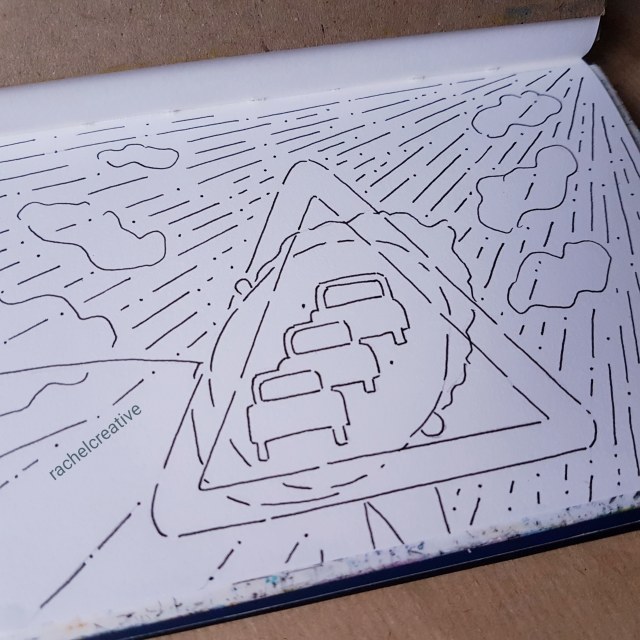
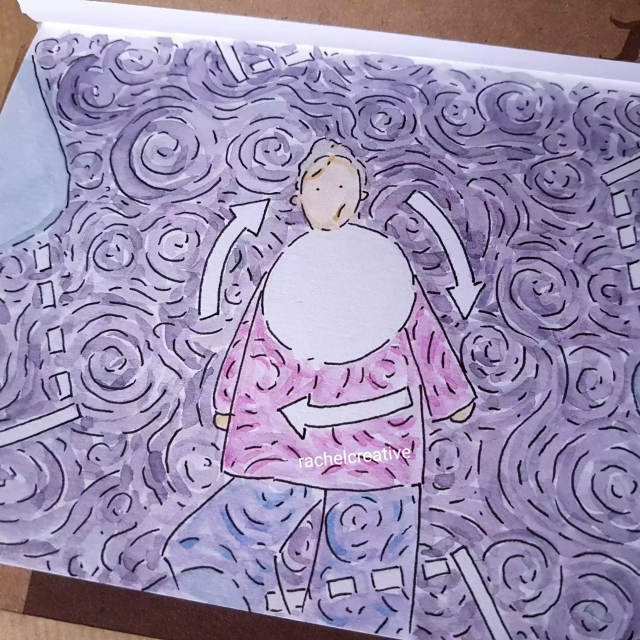
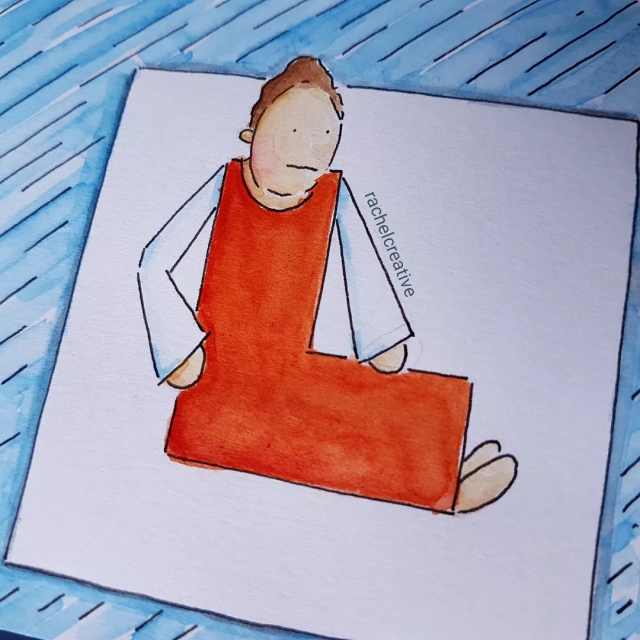
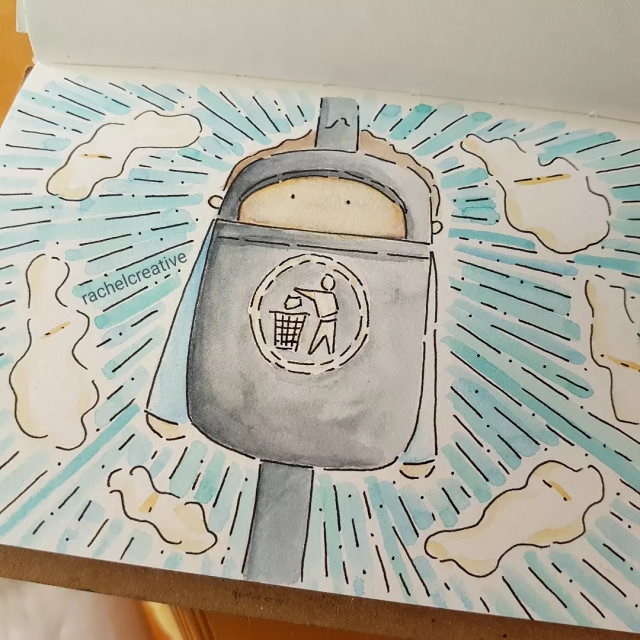
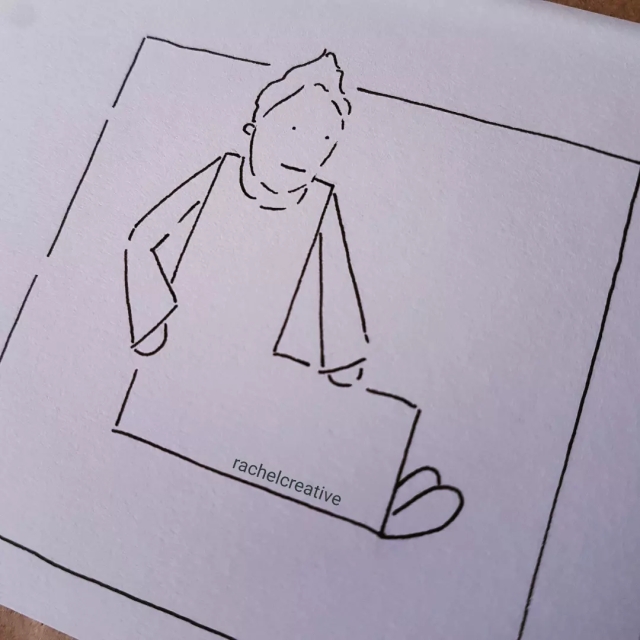
A month ago before his 40th birthday Paul, my husband, blogged a list of things he’d like to do in life.
Here is the drawing I made of that list. I gave to him as a present for his birthday this weekend (along with a hands on ‘Learn to Canoe’ day course towards one of the things on his list).
Below is an archive list of the blog posts for Blogging for ME/CFS Awareness 2008.
12 May 2008 is International ME/CFS Awareness Day and we are bloggers who are trying to do our bit to raise awareness. Different names united in raising awareness - CFS, ME, CFIDS, MCS, PVFS. It’s also Fibromylagia (FMS) Awareness Day.
If you have written a blog post for ME/CFS Awareness and want to be added to our archive list please leave a comment pointing me in the right direction.
It’s a simple question for a complex illness - just what is ME/CFS?
When I tried to think of a drawing to do for my post for Blogging for ME/CFS Awareness 2008 I wondered what could I possibly hope to illustrate about this complicated condition with a simple drawing?
So here’s what I can (remember to) tell you about CFS/ME.
It’s a crap illness to have.
No-one can tell for definate why you have it, what’s causing it, how long you’ll have it for, how it will manifest from one day to the next or how to cure it.
The media has a hang up about it’s past and continues to fuel some (unfounded) stigma for having it.
Patient groups, health professionals and sufferers bicker about what to call it, how to treat it and what is causing it. Under investment in research, treatment and awareness over the last 25 years have only increased friction.
It can mask many other conditions resulting in misdiagnosis and also bears an uncanny resemblance to many other conditions.
You can have a ‘clean bill of health’ in every blood test and still feel worse or be more debilitated than cancer patients undergoing chemotherapy or people with MS, end stage renal disease or AIDS. (Sources 1, 2, 3).
There’s very little which gives sufferers relief but it doesn’t take very much to make them feel worse than ever.
CFS/ME is also more than just feeling tired and needing to stop in bed.
It’s utter exhaustion. It’s having little or no energy. It’s like having a battery that can’t hold it’s charge. It’s having just a few spoons or less a day.
It’s pain and aches and migraines and stomach cramps and bowel problems.
It’s a cloudy brain and getting confused and not remembering and trouble speaking and a fog within your mind.
It’s having little or no reserves and not being able to exert your body without triggering crashing fatigue and/or a myriad of other symptoms - which will last for a day or a week or months or years.
It’s walking a tightrope trying to keep away from things that might (or might not depending on that phase of your illness) worsen your condition but trying at the same time to have some quality of life. It’s trying to protect yourself without wrapping yourself in cotton wool for fear of making yourself ill.
It’s not having a typical presentation, progression or prognosis
It’s draining and seemingly unrelenting and never feeling refreshed or revitalised.
It’s unpredictable and ever changing and challenging and destructive to relationships, family, jobs, esteem and all aspects of your life.
If I exert myself I don’t just feel tired afterwards. It’s so much more complex than that.
Firstly, an exertion can be physical (as in doing the washing up, walking to the corner shop) but it can also be mental (like having an animated discussion, or figuring things out) or emotional (like feeling stressed or worried, getting very excited, grieving). Exertion for a CFS/ME sufferer can be more than just housework or walking or exercise.
Secondly, although the most common reaction to exertion is a “malaise” afterwards this can be immediately afterwards or it can take a couple of days for the ‘payback’ to present itself.
Certainly for me and many others it’s not just about feeling tired (well, actually exhausted and wiped out). It’s also about my tummy and bowel, my migraines, my aches, my pains, my sleep being disrupted, my vision going weird, my breathing, my speech ceasing up and slurring, my words getting muddled, my ability to remember erroding - even dizziness, numbness, muscle spasms, crawling skin and any number of many more unpleasant things.
As these symptoms creep up on me, the greater the exertion the harder they hit and the longer they last.
If it was just a case of feeling a bit tired and needing a little rest maybe it would be easier to manage. Have you ever been knocked off your feet by a virus and struggled to get out of bed?
That’s how I feel every single day - but I still have to wash, I still have to eat, I still have to brush my teeth and take care of business and keep in touch with people and have a life. And every morning I wake up and find that sleep doesn’t refresh me or recharge my batteries.
In fact I have a huge list of symptoms not all of which I have all the time nor can I predict what combinations I may have at any one time.
Now I know all of this probably sounds pretty depressing but please remember what I said at the start about ME/CFS being complex. I think we can include living your life with this debilitating condition as part of that complexity.
It can be challenging, devasting and absolutely awful. But happiness is possible. I think I have shown throughout my artwork and blogging here that life can be good despite CFS/ME. As today is International ME/CFS Awareness Day I thought I’d talk about defining what this illness means - especially as talking isn’t something I usually do a lot of on this blog.
If you’re reading this because you searched for answers about “what is wrong with me” (a question I still find myself muttering on the difficult days) or even what’s wrong with my wife, my brother, my colleague or so on … and some of this sounds familiar, then allow me to give you some sign posts to some less personal answers.
The cardinal symptoms of ME are profound, generalised post-exertional loss of muscle power (fatigability); muscle pain that may include tenderness and swelling; and neurological signs. Patients are also prone to relapses which may take the form of recurrences of the original systemic illness, or fresh episodes of muscle weakness, neurologic changes or well-defined cognitive problems. As with many chronic illnesses, fatigue may be present, but in ME patients the fatigue is post-exertional, often delayed, and quite unlike the ‘fatigue’ experienced by healthy people.
It should be explained that there are a number of different names for what is an illness of uncertain cause affecting many thousands of people. Currently it is estimated that some 250,000 people in Britain are affected by this illness.
Myalgic Encephalopathy or “ME” (a term which The ME Association feels is more appropriate than the original, Myalgic Encephalomyelitis)
Chronic Fatigue Syndrome or “CFS”
Post-Viral Fatigue Syndrome or “PVFS”
Chronic Fatigue Immune Dysfunction Syndrome or “CFIDS”
Imagine feeling exhausted after walking two blocks, having chronic sore throats and muscle and joint pain. Imagine your head feels stuffed with wet sand and when you try to read, words swim on the page. Imagine feeling heavy and sluggish rather than rested after a night’s sleep.
And imagine that these ailments last for years.
These are some of the symptoms of chronic fatigue syndrome … a serious and disabling illness that is now one of the most common chronic illnesses of our time. It is also one of the most misunderstood.
The symptoms of CFIDS are highly variable and fluctuate in severity, complicating treatment and the ill person’s ability to cope with the illness. Most symptoms are invisible, which makes it difficult for others to understand the vast array of debilitating symptoms with which people with the illness must contend.
Other Common Symptoms
Additional symptoms are reported by people with CFIDS (PWCs) such as word-finding difficulties, inability to comprehend/retain what is read, inability to calculate numbers and impairment of speech and/or reasoning. PWCs may also have visual disturbances (blurring, sensitivity to light, eye pain, need for frequent prescription changes); psychological problems (depression, irritability, anxiety, panic attacks, personality changes, mood swings); chills and night sweats; shortness of breath; dizziness and balance problems; sensitivity to heat and/or cold; alcohol intolerance; irregular heartbeat; irritable bowel (abdominal pain, diarrhea, constipation, intestinal gas); low-grade fever or low body temperature; numbness, tingling and/or burning sensations in the face or extremities; dryness of the mouth and eyes (sicca syndrome); gynecological problems including PMS and endometriosis; chest pains; rashes; ringing in the ears (tinnitus); allergies and sensitivities to noise/sound, odors, chemicals and medications; weight changes without changes in diet; light-headedness; mental fogginess; fainting; muscle twitching; and seizures.
Myalgic Encephalomyelitis is not synonymous with being tired all the time. If a person is very fatigued for an extended period of time this does not mean they are having a ‘bout’ of M.E. To suggest such a thing is no less absurd than to say that prolonged fatigue means a person is having a ‘bout’ of multiple sclerosis, Parkinson’s disease or Lupus. If a person is constantly fatigued this should not be taken to mean that they have M.E. no matter how severe or prolonged their fatigue is. Fatigue is a symptom of many different illnesses as well as a feature of normal everyday life – but it is not a defining symptom of M.E., nor even an essential symptom of M.E. …
‘Fatigue’ and feeling ‘tired all the time’ are not at all the same thing as the very specific type of paralytic muscle weakness or muscle fatigue which is characteristic of M.E. (and is caused by mitochondrial dysfunction) and which affects every organ and cell in the body; including the brain and the heart.
Wanted to do a drawing about the snooker having watched quite a bit of the world championship. Except I can’t draw balls.
So I went for a “drawing” of words. Then half way through “Killer Shot” my CFS/ME brain got twisted and I spelt it KILLRE then remembered there was an R on the end.
Sitting on a rug on the back lawn looking at our roof with the blue sky behind it. There was going to be a big fat pigeon standing there but it flew away.
In this (unusually long) post I reflect on this year long project, show you video compilations of all the photos in 4 parts, choose some of my favourites (and explain why) and link to a slideshow of all 366 photos.
You may need to click on READ MORE at the bottom of this post to see all of it.
A year of taking a photograph of yourself every day is a big challenge to take on - especially when you have a chronic debilitating illness like ME/CFS.
When I took the first photograph a year ago I wasn’t sure if I would last more than a week or two. I certainly wasn’t confident that I’d manage a photo every day. My mantra from the start was “I’m in control of the project - it’s not in control of me“.
I liked the idea of an artistic approach - to approach the same subject, day in day out and to find creative ways to explore it. To have to force myself to think about different approaches. Having me as the subject matter meant I would always have easy access to the subject :o) But I began to realise that even if I was unable to engage artistically every day these daily self portraits would become a record of my life with CFS/ME.
Having been formally diagnosed just five months earlier it also documentated a part of my coming to terms with my chronic illness with all the ups and downs and emotional/physical/mental upheaval that would bring.
There were days when I relished the challenge and indeed I can see the improvement in my photography both technically and creatively.
There were days when I didn’t want to carry on and then days when I whooped for joy at what I had accomplished.
There were days when I felt so ill, weak or exhausted that I struggled to hold the camera. Sometimes you’ll see a straightforward head and shoulders shot with a fuzzy focus from my shaking arm. Or on one of those days a shot clearly dictated by wherever I was able to rest the camera in order to press the shutter button.
Looking back through the year of photos I see many things. It’s a personal journey and I have surprised myself at my willingness (and ability to cope with) sharing this part of myself with the world. When you are largely housebound and unable to do simple day to day tasks it can result in some pretty honest portraits of yourself.
I see sadness and laughter, pain and joy, exhaustion and bounce, smiles and frowns. And for a large amount of the pictures - even a lot of the straightforward head and shoulders shots - it evokes memories of the moment I took the photo, the circumstances, the situation, the pain or joy of the day.
1st Quarter: 4 May - 3 Aug 2007
2nd Quarter: 4 Aug - 3 Nov 2007
3rd Quarter: 4 Nov - 3 Feb 2008
4th Quarter: 4 Feb - 3 May 2008
As cliched as it may sound I learnt a lot about myself through doing this. I’m a little more comfortable in my own skin than when I set out. I have proven to myself my determination and my aptitude for creativity. I’ve developed my skills and kindled a passion for photography. I’ve made many discoveries.
Throughout the year my constant source of strength has been Paul. He’s been as important to this project as my camera(s) have. Without his daily support, encouragement and assistance (and sherper duties) I would never have had this opportunity. I love him very much.
Now that the year is over I feel relieved, happy, sad, emotional and proud. I know I am going to miss it but I’m very glad it’s over.
What I am really excited about is what comes next. I am excited to know how my photography will develop without the rigid rules but with my new found skills and confidence. I want to know what my photostream will look like without all the self portraits.
I could say so much but in typical ME/CFS fashion I’m struggling with words. Mainly I’d like the photos to do most of the talking.
My Favourite 25 Photos from the Year
I’ve chosen 25 of my favourite photographs from the year with a little explanation of why they are special to me. It was tough to narrow it down but perhaps my choices will explain a little more of the process, the challenges and the triumphs.